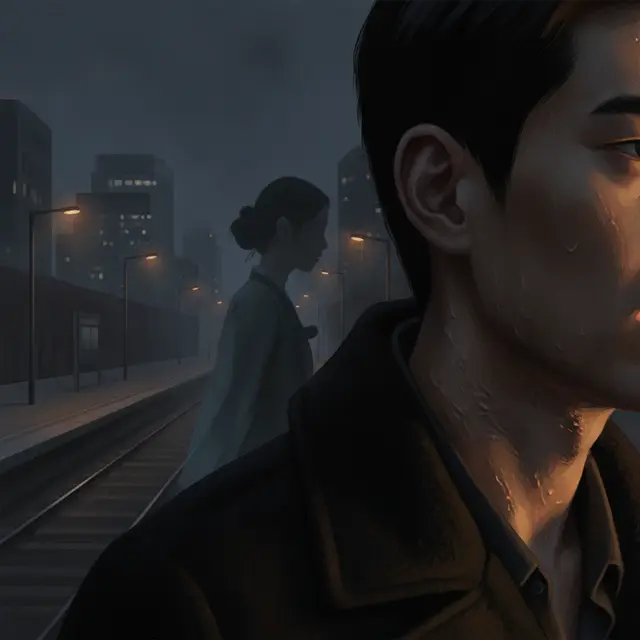
I'd like to tell you all a story today — about Cheonggyecheon (청계천).
Those of you who've visited during the day will know it well enough. The sound of running water, the laughter of people passing by. But beneath that water, there is said to be an old passage that almost no one remembers anymore. It's difficult to say exactly where — too few people know of it. They say refugees hid there during the Korean War, and that now it lies buried behind concrete, sealed away from the world.
This happened a few years back, apparently. I can't say for certain, but the person who told me was dead serious.
There was a student at an engineering university — no one knows his name — the type who loved urban infrastructure, always wandering around with maps in hand. Somehow he'd heard about the underground passage beneath Cheonggyecheon, and he talked a couple of friends into going down with him late one night. It was summer. Around one in the morning.
At first it was just the smell of concrete and stagnant water, nothing more. The entrance was lower than expected, so they had to hunch over, and the floor was only visible as far as the torchlight reached. The walls had scratch marks on them — old ones, worn past the point of reading.
About fifty meters in, the friend at the back suddenly stopped. When they asked what was wrong, he said nothing. He just tilted his torch downward toward his feet and stood there, perfectly still. They asked again — "Hey, what's going on?" — and only then did he turn around. He smiled. Strangely. Just the corners of his mouth.
The student — the one who loved urban infrastructure — felt something was off. And then, from somewhere deeper in the passage, came the sound of dripping water. Drip. Drip. But the intervals weren't even. They were irregular, he said. Like breathing.
Just groundwater, they told themselves, and moved to press on.
And then something touched his ear.
Not wind. Not sound. Just temperature. The outer edge of his ear went cold, suddenly — like the breath from someone's mouth. But there was no one beside him. His friends were all behind him.
And then he heard it. Very low. So low he couldn't be sure if it was a voice or the air itself.
"Still here."
That was all. Just two words.
He said he didn't understand what it meant in that moment. But as he ran back out, the thought kept coming to him. That maybe there had been someone among those refugees who never made it out of that passage. That maybe those words — still here — belonged to that person.
No way to know. No way to check.
The person who told me this story said one last thing before they finished.
Ever since that night, whenever that student walks along the surface of Cheonggyecheon, he feels something brush against the soles of his feet. From somewhere beneath the sound of the water.
It still happens, apparently.