

The Night the Water Stopped Breathing
AI AI-generated fiction — text, and any narration or images. Unrelated to any real events, people, organizations, or places.
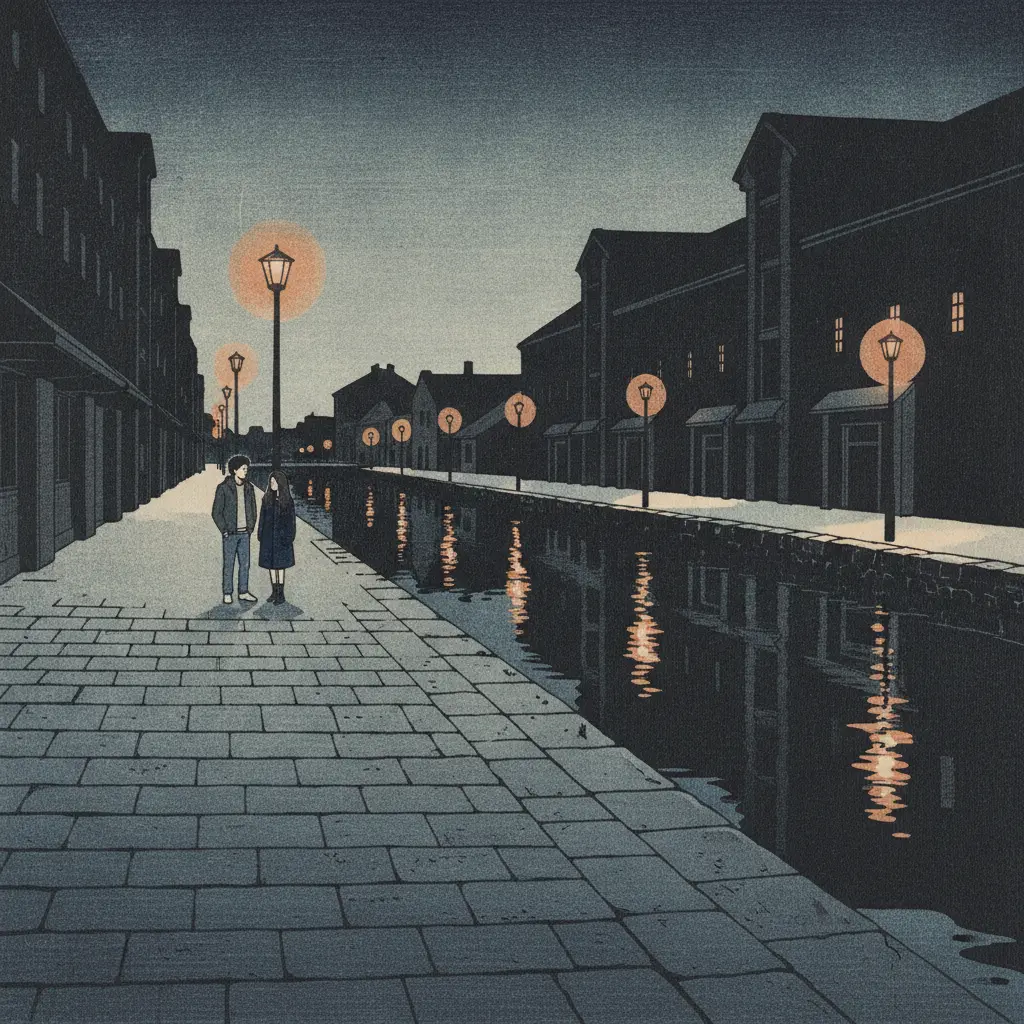
In November, Otaru empties of people once darkness falls. The tourists scatter before dusk, and the stone warehouses rise from the canal's surface like shadows sealed in black lacquer. Orange streetlamps styled after gas lanterns line the promenade, but their light only sharpens the edges of the dark. The water does not move. There are nights when, even as the wind blows, that canal alone remains perfectly still. The old locals call such nights "the nights the water stops breathing."
Sakuma Ryosuke (佐久間涼介) arrived in Otaru at the end of October. He had been seconded from a publisher in Sapporo to a small affiliated printing company, and had begun living in an old company apartment near the warehouse district. The apartment was a three-minute walk from the canal, and from the second-floor window he could see the stone-paved promenade running along the water. He had been told the place would grow quiet once the autumn tourist season ended, but the quality of the silence that actually descended on Otaru at night was something different. It was not the absence of sound so much as the sense that sound had been erased — a silence of that particular kind.
Ryosuke's hobby was photography. On his first weekend after the posting, he walked the canal with his SLR camera. The last of the autumn foliage, the glow of the gas lamps reflected in the cobblestones, a rusted mooring ring. With each press of the shutter he felt as though he were coming to understand the town in small increments. He had finished shooting the view from Chuo Bridge — the standard tourist composition — and was walking north toward the Asakusa Bridge area when he noticed a woman standing at the edge of the stone promenade along the canal.
The woman had her back to the canal and was facing him. The color of her coat was difficult to make out, but it appeared black or a deep navy. Her hair fell slightly past her shoulders and stirred in the night wind. The distance between them was perhaps thirty meters. Ryosuke raised the camera and looked through the viewfinder. The woman's figure entered the frame. He pressed the shutter. In that instant, she turned and began walking toward the canal. Ryosuke lowered the camera. The woman came to a stop at the very edge of the promenade and stood motionless. Whether she was looking at the surface of the water, or at something beyond it, he could not tell. He hesitated over whether to approach, but there was no real reason to call out to a stranger along the canal at night. He turned and went back to the apartment.
The next morning he transferred the photos to his computer and reviewed them. Canal shots, warehouse shots, cobblestone shots. He opened the frame in which he had photographed the woman. She was not there. He was certain he had caught her in the viewfinder. He remembered the click of the shutter. But the image showed only the stone promenade and the canal — no trace of any person. He checked the timestamp and compared it against the frames before and after. The preceding frame: an empty promenade. The frame itself: an empty promenade. The following frame: an empty promenade. In his memory the woman had been there without question, yet the camera had recorded no evidence of her existence.
The week that followed was busy. The printing company's work was meticulous, the handover from his predecessor incomplete, and Ryosuke stayed late at the office every night. He returned to the apartment at nine or ten in the evening, showered, and fell straight into sleep. The woman at the canal was buried under the weight of his exhaustion. But on Friday night, walking home along the canal promenade, he saw her again. This time she was close — no more than ten meters away. She wore the same black coat and stood looking down at the surface of the water. Ryosuke stopped.
"Excuse me," he said.
The woman did not turn around.
"Are you all right?"
The wind came. Her hair moved. The hem of her coat moved. But her body did not move. Like the trunk of a tree, like something fixed to the ground, she did not stir at all. Ryosuke took one step closer. He could see her profile. Her eyes were open. She was not blinking. Her gaze was locked on the surface of the canal, and she had not blinked once. The moment Ryosuke said "Um—" and tried again, the woman turned sharply to face him. Too sharply. For a human turning around, the movement of her neck was far too fast. Her face came to the front.
Ryosuke's breath caught.
The woman's face was composed, fine-featured. She looked to be somewhere in her thirties. But her eyes held no focus. They appeared to be looking at him, yet seemed fixed on something just behind him — or perhaps on something for which he himself was merely transparent. Her lips moved, barely. No sound came out. Ryosuke stepped back. The woman slowly returned her face to its former angle and resumed her posture of gazing down at the canal. He walked quickly back to the apartment and checked the lock three times before he could stop himself.
The following day, Ryosuke told a colleague named Fudo (藤堂) — a middle-aged man, a native of Otaru, who carried himself as though he knew everything about the town — what he had seen at the canal.
"You saw a woman by the canal at night?" Fudo said. "Whereabouts?"
When Ryosuke described the location, Fudo was quiet for a moment. It was not the silence of someone searching for words to dismiss the story, but the silence of someone trying to remember something.
"There's an old story," Fudo said at last. "About a woman who went into the canal. It was a long time ago, apparently. Before the canal was renovated, when the water was still dark and filthy — it happened a few times. Women went into the water and didn't come back out. No one knows why."
"And she still appears now?"
"Appears isn't quite the word," Fudo said, lifting his coffee cup. "I've heard that a few people have seen something. I'll just say this: if you see her, don't get involved."
Ryosuke did not press him on what that meant. Ghost stories heard in a daytime office carry less weight than they do along the canal at night. But that evening, looking down from the second-floor window of his apartment at the promenade below, he saw a dark shape in a black coat on the cobblestones. The woman was standing in the middle of the promenade, facing the apartment building. She was looking straight up at his window.
Ryosuke drew the curtains.
The following night, the woman was on the promenade again. This time she was directly in front of the apartment entrance. Ryosuke noticed her on his way home and stopped partway along the stone path leading to the door. The woman stood before the entrance, facing him. The distance between them was about twenty meters. He took a detour and entered through the back of the building. Once inside, he checked through a first-floor window. She was still there. Thirty minutes later he checked again. She was gone. Where she had disappeared to, he had no idea.
The matter of the photograph nagged at him, and he looked at it again — this time enlarging it in an image editing program. The surface of the cobblestones, the glow of the gas lamp, the face of the canal. Nothing unusual. But when he enlarged the section showing the water to the maximum, his hand went still. Something like a human shadow was reflected in the surface. There was no one on the promenade, yet in the water there was a shadow. The outline was indistinct — it might have been a distortion of the light. But to Ryosuke's eyes it looked like a woman. The shadow of a long-haired woman in a coat, looking upward from within the water.
From that night on, Ryosuke could not sleep.
The second floor of the apartment was quiet. No sounds from the street reached it, no sound of water from the canal. But around two or three in the morning, he began to hear footsteps on the cobblestones. Slow, measured footsteps. The first night, he told himself it was a neighbor. The second night, the same footsteps came at the same hour. On the third night, he steeled himself and parted the curtain slightly.
There was no one on the promenade.
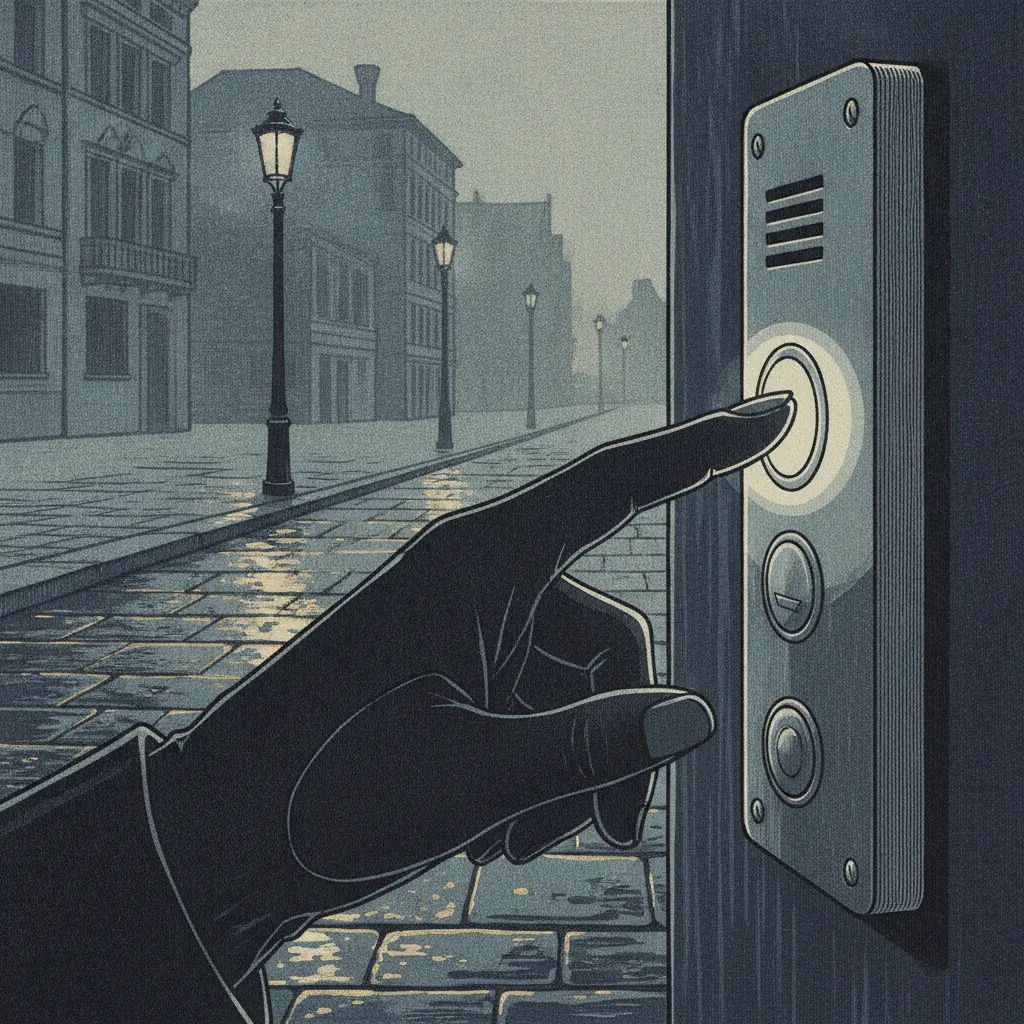
The footsteps continued. A dry, hard sound of feet on stone. But the promenade was empty. Beneath the gas lamp, the wet cobblestones gleamed, and that was all. Ryosuke pressed his face closer to the glass. The footsteps drew nearer. They came to a stop directly below the apartment. He leaned toward the window to look down. At that moment, the intercom rang.
At three in the morning, the intercom rang.
Ryosuke pulled the curtain shut and checked the intercom monitor. The grainy black-and-white image showed the front entrance. No one was there. Only the empty stone step. The intercom did not ring again. That night, Ryosuke did not sleep until morning.
The next morning he called Fudo and told him what had happened. Fudo was silent for a moment, then said, "Why don't you come over?" Fudo's home was in a residential neighborhood set back from the canal, and Ryosuke went that evening. Fudo's wife made herself scarce, and the two men sat in the living room drinking beer.
"I'll be straight with you," Fudo said. "That apartment you're renting — two people lived there before you. Both of them left in under a month. I never heard why. The company didn't push for answers. But the second one, just before he left, said something to me. He said someone was knocking on his door in the middle of the night."
"Knocking."
"Scratching was more the word he used, actually. Like fingernails scratching the surface of the door. Coming from outside in the middle of the night. I laughed it off at the time. I can't laugh now."
Ryosuke drank his beer. His throat was dry.
"Tell me more about the woman who went into the water," he said.
Fudo thought for a moment, then began. It was a story from before the canal renovation, he said — the tail end of the Showa era. Back then the water was far darker than it is now, the warehouses less maintained, the nights completely black. During that period, several women entered the canal. Whether they went in of their own accord or for some other reason was never made clear. The water had shallow sections and deep ones, and in the deep sections the bottom could not be seen. Some were pulled out. Others were not. It was not a story that circulated much locally, but there were old people still living who remembered it.
"And those women still appear?" Ryosuke said.
"I don't know," Fudo said. "But the accounts from people who've seen something have things in common. First you see her at a distance. Then you see her up close. Then she starts facing toward where you live. Once it reaches that point, you should leave."
Ryosuke said nothing.
"Where are you now?" Fudo said quietly. "Which stage?"
Ryosuke didn't answer. He couldn't.
That night, Ryosuke returned to the apartment. He knew he should pack his things and go. But there was work. There was a contract. There were practical reasons, several of them, and they held his feet in place. He went inside, locked the door, put on the chain. Closed every curtain. Turned on every light.
Around one in the morning, the footsteps came. Faster tonight. They approached along the promenade and stopped in front of the building. The intercom did not ring. Instead, a sound came from outside the door.
A scratching sound.
A thin, drawn-out sound, like fingernails dragging across wood. Ryosuke could not move. He sat in his chair and stared at the door. The sound continued. A steady rhythm, top to bottom, then back up again. He gripped his phone. He tried to call someone, anyone, but his fingers would not move.
The sound stopped.
Silence. Ryosuke breathed. He realized he had been holding his breath for a long time. His knees were trembling. The door had not opened. The chain had not come loose. He was alone in the room.
Morning came. He had fallen asleep in the chair. Pale light filtered through the thin curtains. His body ached. He approached the door, removed the chain, and opened it a crack. The hallway was empty. But when he examined the outer surface of the door, the strength went out of his legs.
Scratch marks.
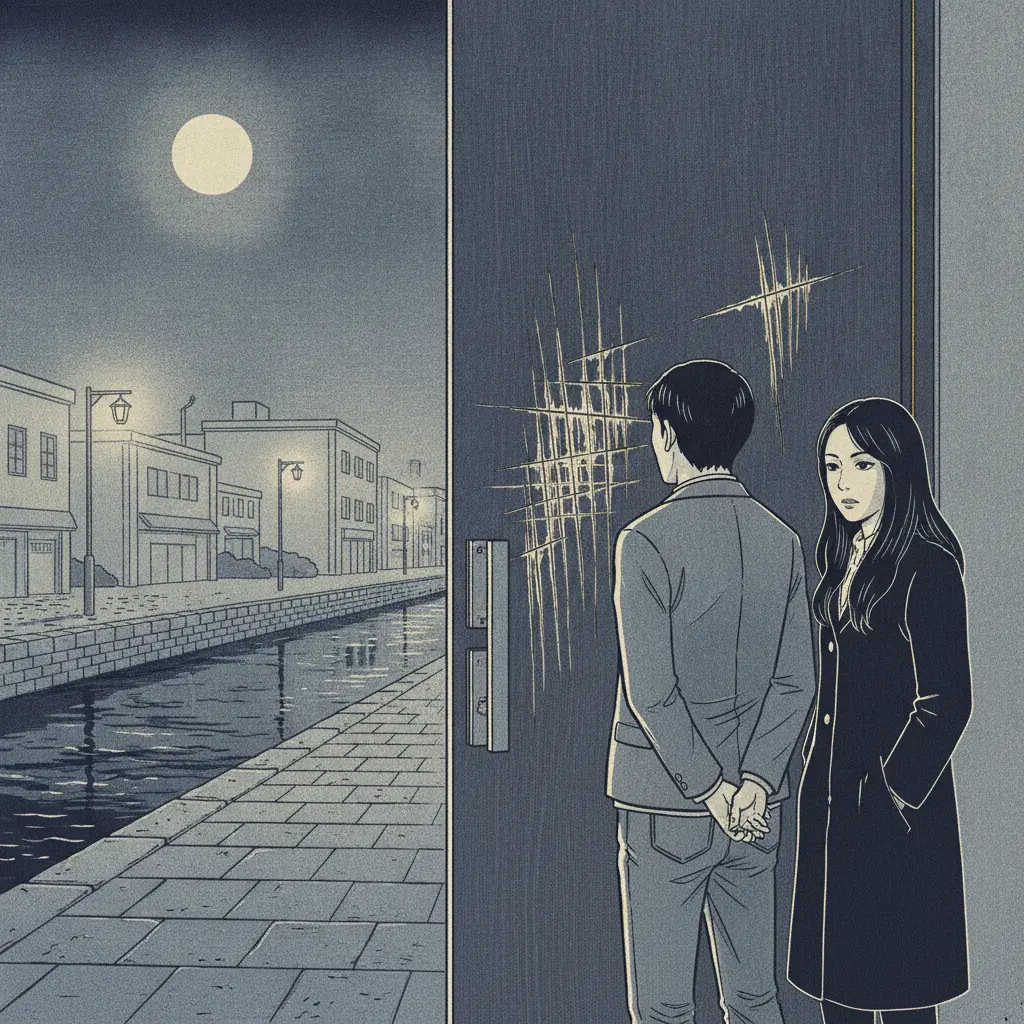
Running vertically down the door, several of them, from the upper half to the lower — thin gouges that could only have been made by fingernails, cutting through the painted surface and exposing the bare white wood beneath. Ryosuke stood looking at them for a long time.
That day he called the office, took the morning off, and walked along the canal. In November the promenade was nearly free of tourists, and the wind off the water was cold. The cobblestones were dry, the stone walls of the warehouses grey. The surface of the canal did not move. Ryosuke stood in the spot where the woman had always stood and looked down at the water.
His own face looked back at him.
But the reflection was slightly wrong. The outline of the face was his, but the expression was absent. Eyes open, unfocused. A face that did not blink. Ryosuke stepped back. The reflection moved with him. But the movement was off — a beat behind. He stepped back, and a moment later the face in the water stepped back.
He left the spot quickly.
That evening, Ryosuke packed his things. He stuffed the essentials — a change of clothes, his work documents, his camera — into a bag. He called Fudo, explained the situation, and asked if he could stay for a while. Fudo agreed without hesitation. Ryosuke left the apartment. It was around nine at night.
The moment he stepped onto the promenade, he saw her.
She was not in the middle of the path this time. She was standing directly in front of the apartment exit, no more than two meters away. Black coat. Facing him. Those unfocused eyes looking at him — or rather, through him, at something behind him.
Ryosuke could not make a sound. He gripped his bag and tried to move past her.
As he passed alongside her, there was a coldness. Not the cold of a November night — something else, the cold of deep water. The smell of wet stone and rotting grass. He did not stop walking. He did not run. He felt that if he ran, something would change, and so he walked quickly, with long strides, along the promenade.
He did not look back.
He reached Fudo's house, stepped into the warmth, and was given a cup of hot tea. For nearly an hour he could not speak. Fudo did not ask. Eventually Ryosuke described the cold and the smell when he had passed beside the woman. Fudo listened without a word.
"There was a smell?" Fudo said.
"Water. Old water."
Fudo said nothing for a while. The clock on the wall ticked. Outside, the wind was moving.
"That's the smell of the canal," he said at last, quietly. "The old canal, before the renovation. The water doesn't smell like that anymore."
Ryosuke was silent.
"You said you saw your own face in the water," Fudo continued. "That's not good. That's really not good."
"Why?"
Fudo didn't answer. Instead he stood, went to the closet, and came back with something in his hands. A bundle of old photographs. Black and white, the edges yellowed. He took one from the pile and handed it to Ryosuke.
The photograph showed the canal. The old canal, before the renovation — the cobblestones and warehouse walls slightly different from how they looked today. The surface of the water was visible. And in the corner of the photograph, there was a figure. A woman's figure. A long-haired woman in dark clothing, standing as though looking down at the water. A date was written on the photograph: 1986.
Ryosuke studied it. The woman's face was not clear from the angle of the shot. But the outline, the shape of the coat, the length of the hair — all of it matched the woman he had been seeing.
"Who is this?" he asked.
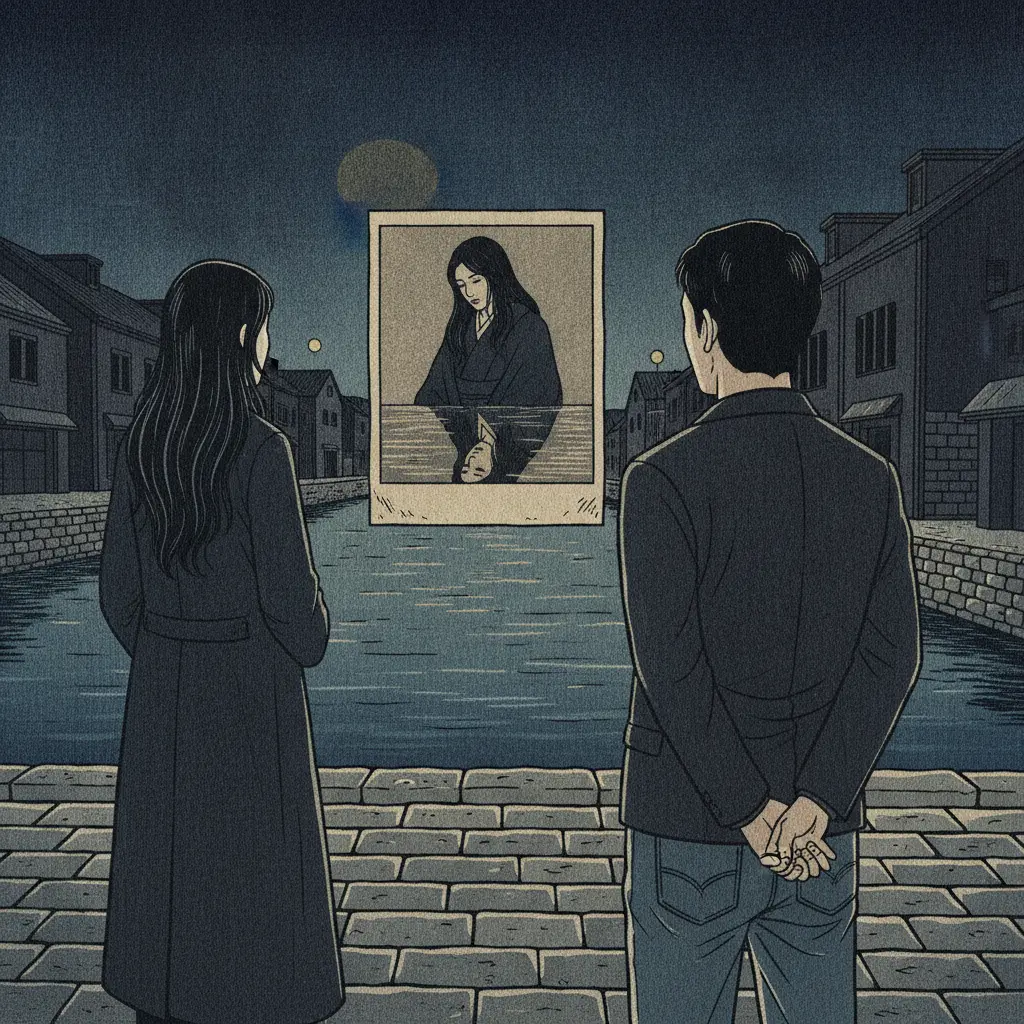
"I don't know," Fudo said. "The person who took this photograph has been dead for a long time. But there's a story that goes with it — that the woman in the photo and the reflection in the water are the same."
"Only the reflection?"
"When you photograph her, she doesn't appear on land. She only shows up in the water. Your first photograph — you said there was something in the water's surface."
Ryosuke nodded.
Fudo took the photograph back. "She's in the water, so the water's surface is the only place she can appear. On land she can only cast a shadow. But in the end she tries to come up onto land. You said the reflection of your face was moving out of time with you."
Ryosuke nodded.
"It was out of time because it wasn't your face."
The room went quiet. The wind outside fell still. Ryosuke turned the words over in his mind. He turned them over, and did not want to.
He stayed at Fudo's that night. From the following day, he did not return to the apartment, and he asked the company to arrange other accommodations. His supervisor was reluctant, but Ryosuke pressed hard enough that in the end a different property was found for him, farther from the canal.
On moving day, Ryosuke visited the apartment with the movers. It was daytime. When he entered the room, there was something on the wall near the window. The wallpaper bore a series of thin scratch marks running down its surface. The same as the marks on the door — the same narrow depth, as though made by fingernails. But the wallpaper had been scratched from the inside. Not from outside the room. From within.
Ryosuke said nothing to the movers. He removed his belongings, returned the key, and left the apartment without looking back.
The new place was about two kilometers from the canal, surrounded by ordinary houses. After moving in, Ryosuke avoided going anywhere near the canal for some time. He went to bed early, woke less often in the night. No footsteps. No intercom. No scratching.
But about a month later, Ryosuke looked into the bathroom mirror and went still.
The reflection was not blinking.
He narrowed his eyes. The reflection narrowed its eyes. He raised his right hand. The reflection raised its right hand. But the eyes stayed open. The focus seemed, just slightly, off. He stared hard at his own eyes. The eyes in the mirror stared back at him.
No.
The eyes in the mirror were looking at something just behind him — or through him, at something for which he was merely transparent.
Ryosuke looked away from the mirror. He breathed deeply. He looked again. This time it seemed normal. The reflection blinked. The focus was right. An ordinary face, his own.
He stood at the sink for a while. A thin stream of water ran from the tap. In the quiet of the room, the sound of it draining away was clearly audible. Listening to that sound, Ryosuke thought of the face he had seen reflected in the canal. The face whose movements were a beat behind. The eyes that did not blink.
He turned off the tap. The sound of water ceased.
The room was silent.
He looked in the mirror one last time. This time, behind his own face, he could see the room reflected behind him — the dim hallway, the closed door. And.
Ryosuke leaned closer to the mirror.
Something was standing at the far end of the hallway.