

What Dwells in Daereungwon
AI AI-generated fiction — text, and any narration or images. Unrelated to any real events, people, organizations, or places.
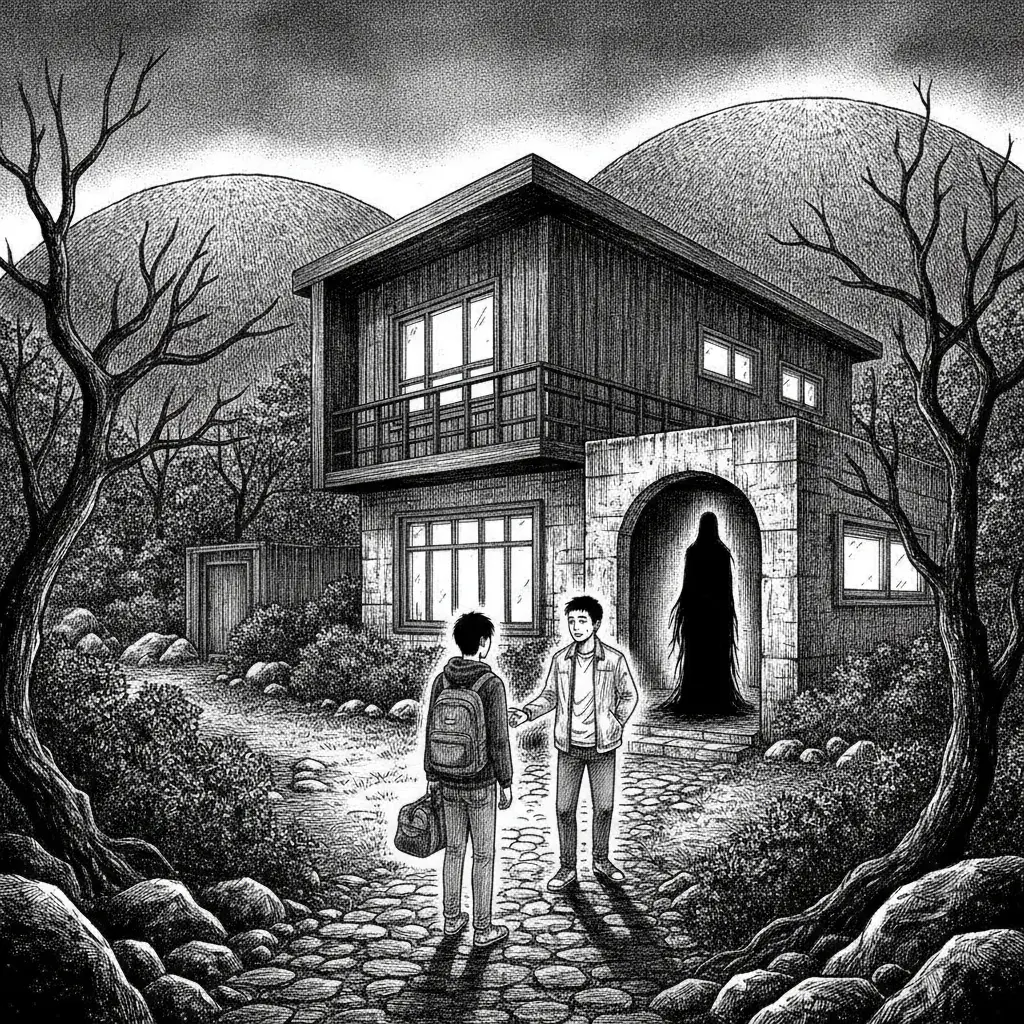
Minjun's arrival in Gyeongju was entirely accidental. Three months had passed since he'd quit his job at a Seoul publishing house, and his bank account was beginning to show its bones, when a college friend reached out to say he'd opened a small guesthouse near Hwangridangil and that Minjun was welcome to come down for a month and rest. The arrangement was simple: help with cleaning and check-ins in lieu of rent. Minjun packed without deliberation. Two things pulled him south — a vague desire to write something, and the permission to do nothing at all.
The guesthouse stood a five-minute walk from the outer wall of Daereungwon. Open the window and the burial mounds filled the view, their contours rising in long, gentle swells like sleeping hills. For the first few days the sight struck him as simply beautiful in an unfamiliar way. Spring sunlight lay evenly across the grass, and tourists strolling the narrow paths between the mounds made the whole scene feel almost tranquil. His friend Jaehyeon had an easy temperament and asked little of him. On mornings with no check-ins, Minjun would carry his laptop to a bench inside the park and sit staring at a blank screen before wandering back.
The trouble began on the third night. When he lay down to sleep, a low, even sound came from beyond the window. He told himself it was the wind. The spring wind in Gyeongju was gentler than Seoul's, and the air drifting in from around the mounds carried a particular smell of earth, so there seemed nothing strange in it. But the sound did not stop when the wind died. It stretched out low and then seemed, at moments, to curve and inflect like a human voice. Minjun stood at the window and listened, but the mounds rose silent in the moonlight, saying nothing. In the dark their silhouettes looked far larger and heavier than by day — like something alive, hunched over, pressing itself flat against the ground.
When he mentioned it to Jaehyeon, his friend gave a small laugh. Same thing happened to me at first. You get used to it and then you don't hear anything. We're living next to thousand-year-old graves — it's just how it is. He took a calm sip of his beer. Minjun didn't ask again.
On the fifth evening, Minjun experienced Daereungwon for the first time after closing. Walking back from a small restaurant on the Hwangridangil side, he followed the outer wall, and the park after hours felt like an entirely different place. The mounds beyond the wall had sunk into darkness without a single light, and the shadows of the trees lining the paths lay stretched long across the ground inside. He tried not to slow his pace, but somewhere along the middle of the wall he saw something. On the flat grass below the largest mound, inside the wall, a figure was standing. Or rather — something that resembled a figure. It was not moving. It was simply there. Minjun stopped and rubbed his eyes. The shape remained. Its color was so close to the surrounding dark that he could not distinguish clothing from body, and the place where a face should have been seemed to be turned toward him, or perhaps not — he couldn't be certain. He walked back to the guesthouse quickly.
Jaehyeon was already asleep. Minjun sat alone on the wooden floor and drank a glass of water, cycling through the same thoughts: a drunk, probably, or a trick of the eyes. But that night, just before sleep, when the sound came again from the direction of the mounds, he already knew it was not simply wind. It sounded like a person murmuring something low and steady. Whether it was language he could not say. It had a rhythm — like the meter of a very old song, or like a name being repeated.
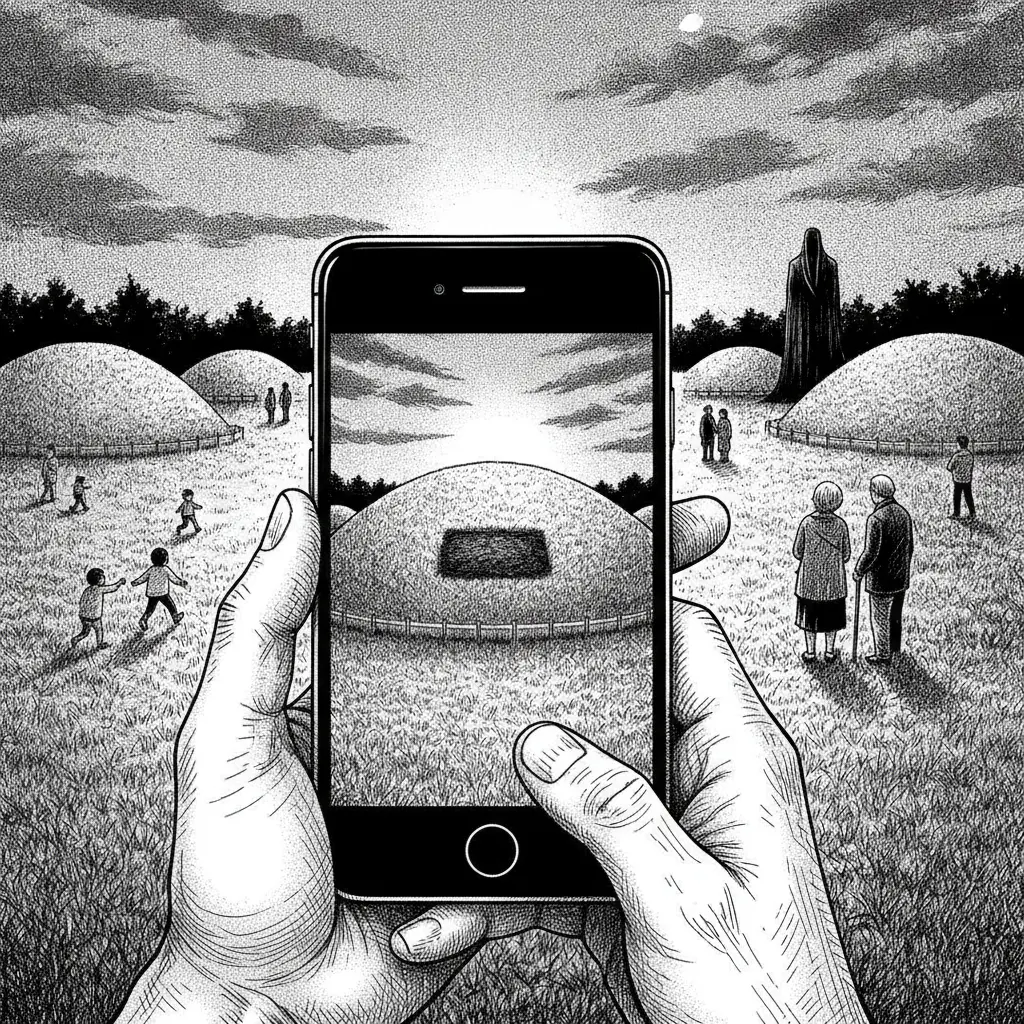
A week passed. Minjun began visiting Daereungwon during the day as well. The park was no longer a tourist attraction to him. He sat on a bench and watched people move between the mounds — children running, couples taking photographs, old men walking slowly. The mounds received all of it without reaction. He studied the slope of the largest mound for a long time. The grass grew uniformly across it. But near the middle of the slope there was a patch where nothing grew — a shape close to a rectangle, the bare earth exposed as though something had rested there for a long time and been recently removed. Minjun took a photograph.
Back at the guesthouse, as he studied the image, Jaehyeon looked over his shoulder. Oh, that. There was a stone there until a few days ago. Big flat one. Looks like the groundskeepers moved it. Minjun nodded. He asked why the grass hadn't grown back in that spot, and Jaehyeon thought for a moment before saying: the stone was there a long time, that's all. No further explanation. Jaehyeon's answers were always like that — reasonable, but with something missing from them.
That night Minjun dreamed. In the dream he was inside Daereungwon. The light was neither the brightness of day nor the darkness of night but something gray and in between. The mounds stood much closer than they should have, and the grass was strangely cold beneath his feet. He was walking. He didn't know where, but his feet moved on their own. When he reached the largest mound, someone was kneeling before that bare rectangular patch of earth on the slope — dressed in a white jeogori. Minjun tried to circle around to see the face, but the particular resistance of dreams held his body in place. His feet were fixed to the ground. Then the kneeling figure slowly raised its head, and at that moment Minjun woke. His heart was beating fast. The room was dark. Through the window the silhouettes of the mounds were there. And the sound came. Clearer tonight than before. He pulled the blanket up and pressed it over his ears, but the sound seemed to follow him inside it.
The next day Minjun walked through Daereungwon more carefully. Moving among the visitors, he found something on one of the narrow paths — a corner in the northern end of the park where tourists rarely went. A weathered wooden sign had been pushed into the ground there. The lettering was different from the official markers. The paint was half-stripped and difficult to read, but Minjun crouched down and made it out. It said: Do not enter this path after sunset. Below that were what appeared to be numbers — a date, perhaps — but the paint had worn away too completely to decipher. He photographed the sign. When he asked a staff member at the management office when it had been put up, the man looked at it, and his expression went briefly still. It's old, he said. Don't worry about it. He said nothing more. The instruction not to worry about it was precisely what made Minjun unable to stop.
On the tenth night, Minjun walked along the outer wall again. Jaehyeon had gone out early to meet friends on the Hwangridangil side. Minjun ate alone, then followed the wall at a slow pace. Heavy clouds had moved in and there was almost no moonlight. Streetlamps stood at long intervals, and the interior of the park was complete darkness. He tried not to look over the wall as he walked. But when he reached the spot — the same point where he had seen the figure three nights before — a sound came from the other side. Footsteps. The sound of grass being pressed underfoot, soft and yielding, which made it all the more distinct. Minjun stopped. The footsteps stopped. He walked again; they walked again. He stopped; they stopped. The synchrony was perfect.
Minjun stood still and looked over the wall. At first there was nothing. But as his eyes adjusted to the dark, he saw it — something standing on the grass perhaps ten paces from the wall. The same figure as before. This time it was closer. He could make out its shape more clearly. It was tall. Its darkness seemed to belong to the body itself rather than to any clothing. The place where a face should have been was turned toward him. But there was no face. Or it was not quite right to say there was no face — it was more that the darkness had gathered itself into the shape of one. What disturbed him most was that the thing showed no reaction to being looked at. The absence of reaction was itself the terror. It did not move. It made no sound. It was simply there — as though it had been there for a very long time, and would go on being there.
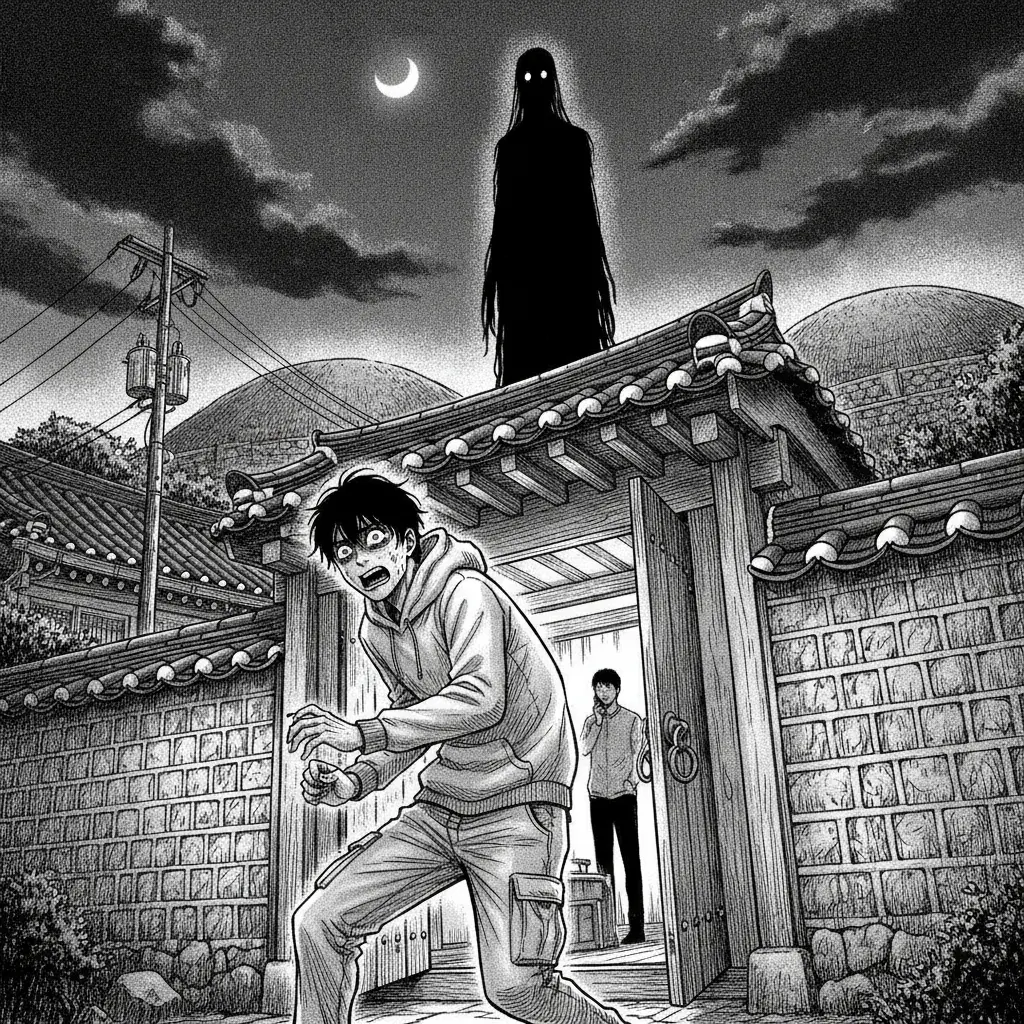
Minjun stepped back and nearly tripped over his own feet. He turned and walked quickly. He tried not to run, but he ran. Even after he was inside the guesthouse with the door locked, his heart would not settle. He thought about calling Jaehyeon and stopped himself. What would he say? That there was a dark shape standing beyond the wall? That he'd seen something strange near the mounds at night? Jaehyeon would only say it again: you get used to it and then you don't hear anything.
That night Minjun went through the photographs he had taken. The bare rectangular patch of earth. The weathered sign. And the photo he had taken over the wall on the night he first saw the figure — the one he had dismissed at the time because he thought there was nothing in it. Looking at it now, he could see a faint vertical shadow standing in the middle of the grass. There was no light source in that spot that could have cast it. He enlarged the image. The shadow was unmistakably human in shape. But what held him longer was the lower portion of the photograph, the grass right beside the wall. There were footprints. Clear impressions in the pressed grass. They led from somewhere inside the park toward the wall. And they stopped directly at the wall's base. They did not continue on the other side. There was no sign of anything having climbed over. They simply ended there.
Minjun opened his laptop. The screen was blank. He had written nothing since coming to Gyeongju. He began typing without thinking about it — at first it seemed like documentation, a record of what he had seen. The figure. The sound. The footprints. But at some point the writing turned in another direction. Characters appeared. A nameless person was walking alone along the outer wall of Daereungwon. The person looked over the wall and met the eyes of whatever was inside. Minjun kept writing. His hands did not stop. It was past two in the morning when he finally lifted them from the keyboard. He had written a great deal. But reading back the last sentence, he went still. It read: It was not watching from outside the wall. From the very beginning, it had been watching from within.
Minjun was not certain he had written that sentence. He had clearly typed it, but he could not remember what intention had produced it. He saved the file and closed the laptop. He tried not to look toward the window. But his eyes went there on their own. The mounds were still in the darkness. There was no sound. Now the absence of sound was the stranger thing. The air in the room was different despite the silence — different in a way he could feel. He had not left the window open, yet there was a smell of earth. Old earth. The smell of a space that had been sealed for a very long time.
The next morning Jaehyeon was making coffee when he said: did you come in early last night? I got back in the small hours and your light was on. Minjun said yes, he'd been writing and gone to bed late. Jaehyeon smiled and said: finally getting something down, then. Minjun smiled back. But Jaehyeon's next words were strange. Hey — why did you leave the window open? You must have been cold. Minjun paused. He was about to say he hadn't opened the window, but he closed his mouth. I must have been tired, he said instead.
That afternoon Minjun went back to Daereungwon. This time he went into a small reference room beside the management office near the entrance. Panels on the walls explained the history of the park and its mounds. He read through them slowly. The tombs of Silla kings, the burial goods recovered in their thousands, the excavation process. One panel caught his eye. It described how unrecorded burial artifacts had continued to surface throughout excavations of the Daereungwon area, and that among these, some had never been attributed to a specific owner. Below that, in smaller print: certain tombs, based on their internal structure, have been proposed as possible sites of multiple interments rather than a single occupant, though this has not been confirmed. Minjun read the sentence twice. Multiple interments. Not confirmed.
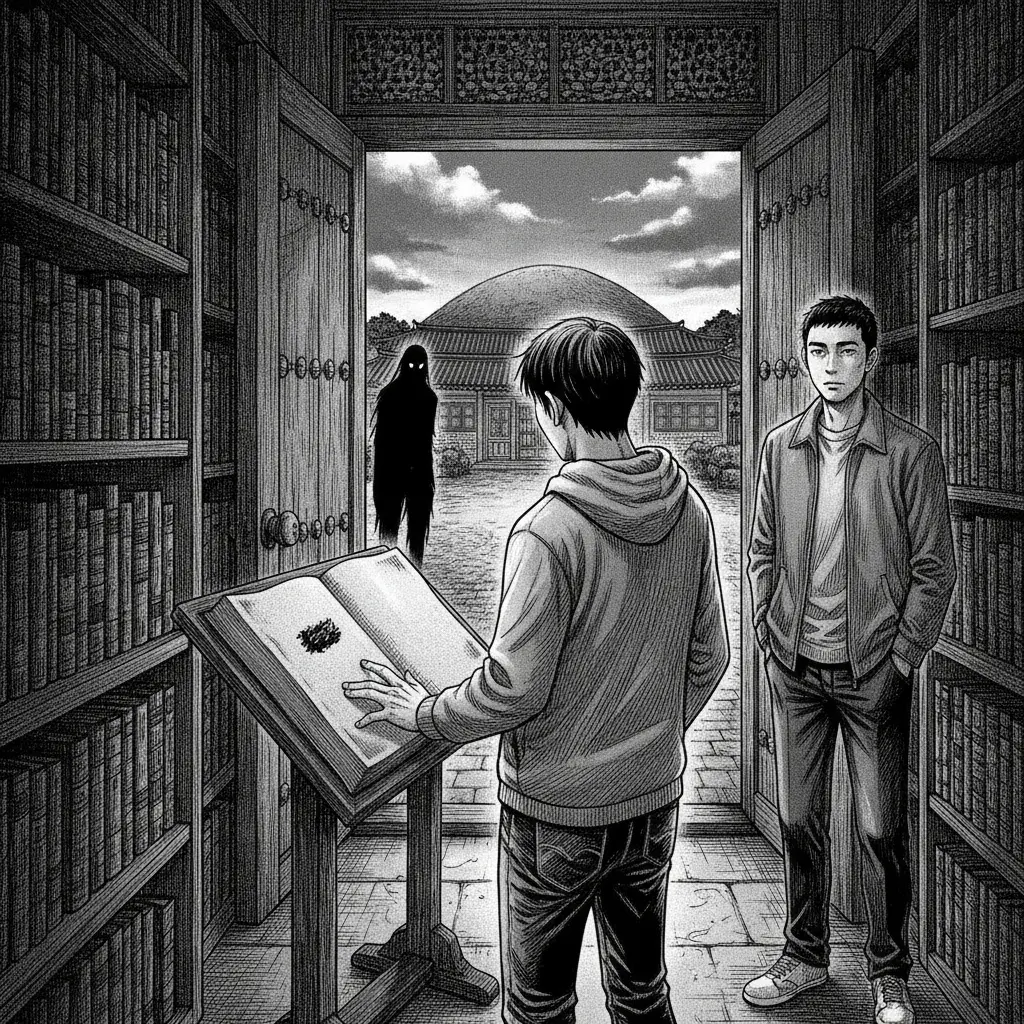
On his way out of the reference room, he idly flipped through a visitor's guestbook near the entrance. It was old. Near the very last page his hand stopped. In a space with no name and no date, someone had written in small letters: I heard my name called here. I heard it three times. Minjun closed the book.
That night the sound returned. But this time it was different from before. It was not the low, even murmur. It was distinct. And Minjun understood what it was saying. His own name. Minjun, it called. Once. And then once more. The voice had no direction — it did not come from beyond the window, nor from within the room. It existed inside the air itself. Minjun pulled the blanket over himself and closed his eyes. Even with his eyes shut, his name came to him through the dark. When it came a third time, he answered without meaning to — in a small voice, barely more than a breath. Yes, he said.
After that, no sound came. The room went completely quiet. No wind, no noise from the street. Minjun lay in the silence unable to tell whether it was the silence before an answer, or the silence after something had already concluded. The last thought he had before sleep was this: that something knows your name means it has known you for a long time.
Minjun left for Seoul two days later. He told Jaehyeon something urgent had come up. Jaehyeon said that was a shame, lightly, and let him go. While packing, Minjun opened the window one last time. The mounds of Daereungwon lay peacefully in the morning light. A few tourists were already walking the paths. A child was playing at the foot of one of the slopes. Minjun closed the window.
Back in Seoul, he opened the file he had written that night in Gyeongju. Reading it over, he found it better than he'd expected. The sentences were clear in a way that felt almost unfamiliar. But the file was much longer than he remembered. It seemed as though content had been added after his last save. The final several paragraphs he had no memory of writing. The style was different — the sentences read as though they came from somewhere much older. And within those paragraphs, the things Minjun had experienced in Gyeongju — things he had not yet told anyone — were recorded with precise and exact accuracy.
The last sentence read: He answered. We heard it. His name is here now.