

Deoksugung (德壽宮)
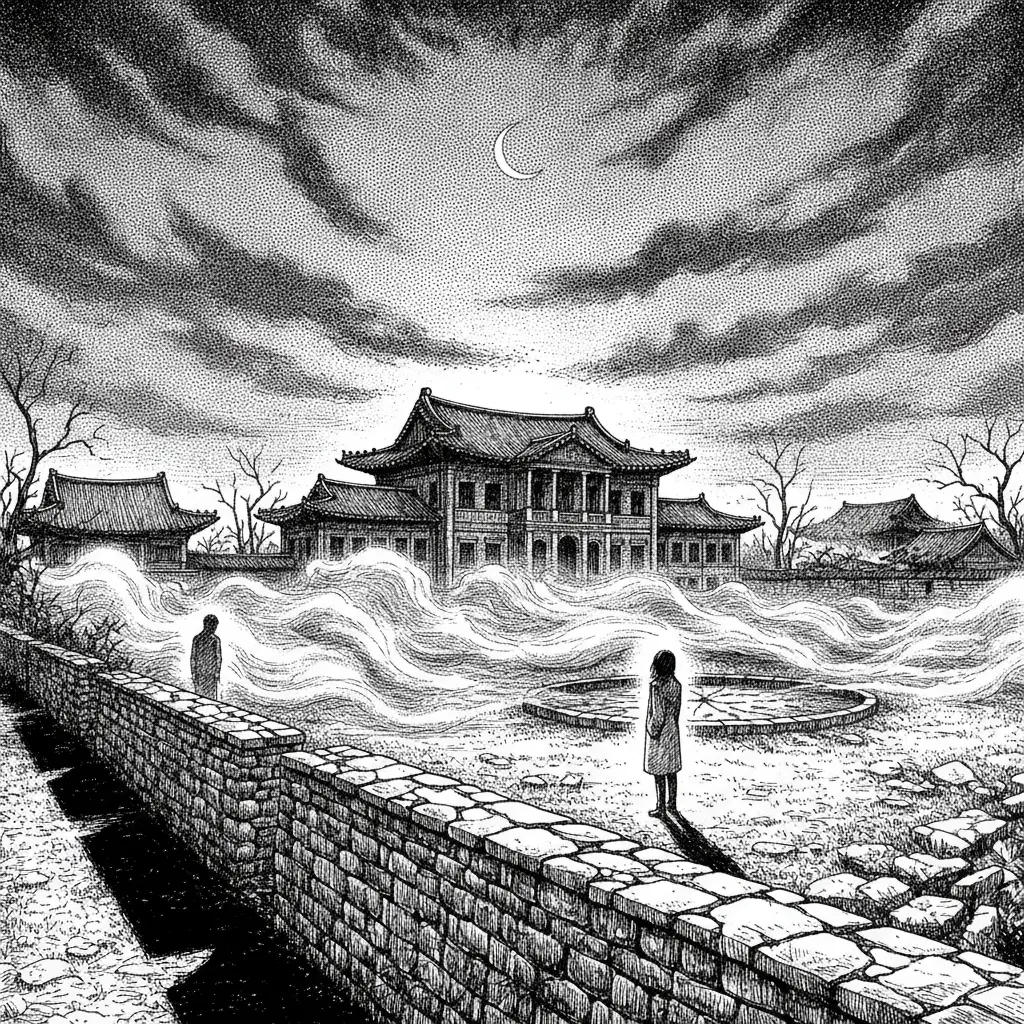
Deoksugung (德壽宮) is a Joseon and Korean Empire-era palace located in Jeong-dong, Seoul, where, following the death of Emperor Gojong on the grounds in 1919, unexplained footsteps and sudden chills are said to have been reported in its empty courtyards.
Where empire ended, fire rose twice and the name changed three times — and yet something is said to linger still within those courtyards.
Inside the stone-walled lane of Jeong-dong in Seoul, this palace — originally named Gyeongungung (慶運宮) — was never a royal seat from the beginning. It passed through confiscation from a man implicated in treason, was granted to a woman of the royal household, then reclaimed, and only then became a palace. There are those who say it was a place born already twisted, carrying a crooked fate from its very first moment.
In a Hanyang blanketed by the ashes of the Imjin War, King Seonjo took the private residence of Prince Wolsan as a temporary refuge. From that point on, this ground acquired the character of a place where kings shelter in extraordinary times. King Gwanghaegun was enthroned here, then King Injo, and at last, in 1897, Emperor Gojong — who had returned alone from the Russian legation — proclaimed the Korean Empire from within these walls. It was a magnificent declaration, yet the years that followed are said to have been nothing but endless erosion.
In 1904, a great fire of unknown origin swept through the entire palace, consuming most of its halls. They were rebuilt the following year, but in 1907, when Emperor Sunjong departed for Changdeokgung, he bestowed upon his father the name Deoksugung — meaning "may one of high virtue live long." A son left his father behind in this palace and walked away. Gojong spent his remaining years alone among these pavilions, and died here in 1919. Through the years of Japanese occupation, the palace grounds were drastically carved away, and the halls were demolished one by one until their traces were lost.
To this day, scattered accounts drift through the city — of presences sensed near the fountain before Seokjojeon, or in the shadow of the stone walls. There are rumors of an inexplicable chill felt beyond the Jeong-dong stone-wall path, famous for its night walks, or of footsteps heard in an empty courtyard. Yet all of it remains unverified, nothing more than whispered rumor.
Whether what this palace holds changed with each renaming, or whether the same weight has been accumulating from the very start — voices calling for the restoration of its old name, Gyeongungung, are still heard from time to time. Whether reclaiming that single name might at last allow something to leave its place, no one knows.
AI Auto-generated by AI — text and any images are AI-generated fiction based on folklore and rumors, not a record of real events.
Location
Think this entry is wrong or out of date? Re-investigate — we’ll re-read the source (Wikipedia) and refresh it. Once a day per entry.
Source: 덕수궁 — Wikipedia (ko.wikipedia.org). Adapted and reconstructed by this site. License CC BY-SA 4.0.